搜索
高级检索
高级搜索
书       名 :
著       者 :
出  版  社 :
I  S  B  N:
文献来源:
出版时间 :
空气质量监测与数据科学(英文)
0.00     定价 ¥ 149.00
图书来源: 浙江图书馆(由JD配书)
此书还可采购15本,持证读者免费借回家
  • 配送范围:
    浙江省内
  • ISBN:
    9787030825834
  • 作      者:
    刘辉
  • 出 版 社 :
    科学出版社
  • 出版日期:
    2025-06-01
收藏
内容介绍
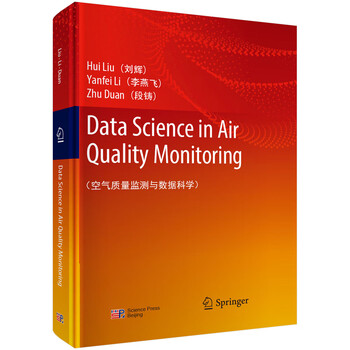
空气质量问题一直是交通系统、工业生产、民用建筑等各个工程领域的科学家和工程师们关注的焦点。空气质量监测是大气污染控制和预警的基础。《Data Science in Air Quality Monitoring(空气质量监测与数据科学)》从数据科学的角度介绍了各种工程环境中空气质量监测的一系列*新方法。通过大量的实验模拟,详细阐述了空气质量监测的预处理、分解、识别、聚类、预测和插值等数据驱动的关键技术。《Data Science in Air Quality Monitoring(空气质量监测与数据科学)》可为工程空气质量监测数据科学技术的发展提供重要参考。《Data Science in Air Quality Monitoring(空气质量监测与数据科学)》可供环境、大气、城市气候、民用建筑、交通和车辆等领域的学生、工程师、科学家和管理人员使用。
展开
精彩书摘
Chapter 1 Introduction
  Abstract This chapter highlights the importance of air quality monitoring to public health, environmental sustainability, and economic development, as well as its key role in environmental protection and policymaking. It further examines the current landscape of data science in environmental monitoring, acknowledging the inherent complexity of air quality data and the challenges associated with its collection. Based on this, this chapter outlines the current application of data science in air quality monitoring and points out the achievements and shortcomings of existing research. This chapter aims to explore this field in more depth by focusing on the key issues faced by data science in air quality monitoring, including data preprocessing, data decomposition, data identification, data clustering, data prediction, and data interpolation. For each key issue, this chapter discusses its role and importance in air quality monitoring, analyzes the challenges each faces, and outlines the commonly used methods. Finally, this chapter briefly introduces the scope of this book, laying the foundation for the content of subsequent chapters.
  This chapter highlights the importance of air quality monitoring to public health, environmental sustainability, and economic development, as well as its key role in environmental protection and policymaking. It further examines the current landscape of data science in environmental monitoring, acknowledging the inherent complexity of air quality data and the challenges associated with its collection. Based on this, this chapter outlines the current application of data science in air quality monitoring and points out the achievements and shortcomings of existing research. This chapter aims to explore this field in more depth by focusing on the key issues faced by data science in air quality monitoring, including data preprocessing, data decomposition, data identification, data clustering, data prediction, and data interpolation. For each key issue, this chapter discusses its role and importance in air quality monitoring, analyzes the challenges each faces, and outlines the commonly used methods. Finally, this chapter briefly introduces the scope of this book, laying the foundation for the content of subsequent chapters.
  1.1 Overview of Data Science in Air Quality Monitoring
  Throughout the development of environmental protection, air quality monitoring and management have always been an indispensable part due to their significant implications for public health, environmental sustainability, economic stability, and policymaking. Figure 1.1 shows the framework of data science in air quality monitoring. As air pollution poses severe risks, effective monitoring systems are essential to track, analyze, and manage air quality. Data science and technology have transformative potential to improve the accuracy and reliability of air quality monitoring. This overview provides an in-depth analysis of the importance, challenges, and applications of data science and technology in air quality monitoring.
  1.1.1 Importance of Air Quality Monitoring
  Since the Industrial Revolution, air pollution has become a major problem threatening human health and environmental sustainability, especially for children. According to the data from the World Health Organization (WHO), in 2019, 99% of the world’s population lived in areas where air quality did not meet WHO guidelines (https://www.who.int/news-room/fact-sheets/detail/ambient-(outdoor)-air-quality-and-health). Air quality monitoring is a basic tool for addressing this global challenge and is essential for reducing the negative impact of air pollution. With the advancement of technology, air quality monitoring continues to integrate new technologies such as data science, machine learning, and the Internet of Things, thereby improving its accuracy and efficiency. The importance of air quality monitoring has thus become increasingly prominent and has become a key area in environmental science and policy research.
  1.1.1.1 Impact of Air Quality on Public Health, Environment, and Economic Development
  Air quality has a far-reaching impact on public health, the environment, and economic development. Air pollution is considered one of the world’s most serious public health problems. In areas with rapid urbanization, its threat to human health is particularly significant. Air pollutants, such as fine Particulate Matter (PM2.5, PM10), sulfur dioxide, ozone, and nitrogen oxides, not only cause respiratory diseases but also aggravate a variety of health problems such as cardiovascular disease, asthma, chronic obstructive pulmonary disease, and lung cancer, especially for children, the elderly and people with chronic diseases. Studies have shown that longterm exposure to high concentrations of air pollution will significantly increase the incidence of premature death and chronic diseases, leading to premat
展开
目录
Contents
1 Introduction 1
1.1 Overview of Data Science in Air Quality Monitoring 2
1.1.1 Importance of Air Quality Monitoring 2
1.1.2 The Role of Data Science in Environmental Monitoring 6
1.1.3 Characteristics and Challenges of Air Quality Data 10
1.1.4 Current Application of Data Science and Technology in Air Quality Monitoring 13
1.2 Key Problems Data Science in Air Quality Monitoring 16
1.2.1 Data Processing 16
1.2.2 Data Decomposition 21
1.2.3 Data Identification 25
1.2.4 Data Clustering 27
1.2.5 Data Forecasting 33
1.2.6 Data Interpolation 36
1.3 Scope of the Book 42
References 44
2 Data Preprocessing in Air Quality Monitoring 49
2.1 Introduction 49
2.2 Data Acquisition 51
2.3 Characteristic Analysis of Air Quality Data 52
2.3.1 Temporal Characteristics 52
2.3.2 Spatial Characteristics 55
2.4 Missing Data Imputation of Air Quality Data 56
2.4.1 Missing Data Imputation Performance Evaluation 58
2.4.2 Univariate Missing Data Imputation Based on K-Nearest Neighbors 60
2.4.3 Multivariate Missing Data Imputation
Based on Self-Organizing Map 61
2.5 Outlier Detection of Air Quality Data 65
2.5.1 Outlier Detection Performance Evaluation 66
2.5.2 Outlier Detection Based on Unsupervised Isolation Forest 67
2.5.3 Outlier Detection Based on Hampel Filter 70
2.5.4 Outlier Detection Based on Deep Learning Forecasting 75
2.6 Preprocessing Performance Comparison 78
2.6.1 Performance Comparison of Missing Data Imputation 78
2.6.2 Performance Comparison of Outlier Detection 81
2.7 Conclusions 82
References 83
3 Data Decomposition in Air Quality Monitoring 85
3.1 Introduction 85
3.1.1 Application of Wavelet Decomposition in Air Quality Data Analysis 86
3.1.2 Application of Modal Decomposition in Air Quality Data Analysis 86
3.1.3 Deficiencies and Challenges of Existing Research 87
3.1.4 Temporal Resolution 87
3.1.5 Frequency Resolution 87
3.1.6 Boundary Effect 88
3.1.7 Noise Reduction Effect 88
3.2 Wavelet Decomposition of Air Quality Data 90
3.2.1 Time-Frequency Localization Characteristics 90
3.2.2 Multi-resolution Analysis 90
3.2.3 Strong Sparse Representation Capability 91
3.2.4 Discrete Wavelet Transform 92
3.3 Top Layer: Approximation Coefficients 97
3.4 Detail Coefficients 97
3.4.1 Reconstruction Error 98
3.4.2 Signal-to-Noise Ratio (SNR) 98
3.4.3 Correlation Coefficient 99
3.4.4 Various Wavelet Basis Functions 100
3.4.5 Continuous Wavelet Transform 104
3.5 Mode Decomposition of Air Quality Data 106
3.5.1 Empirical Mode Decomposition 106
3.5.2 Variations and Improvements of the Traditional EMD Method 110
3.6 Decomposition Performance Comparison 113
3.6.1 Decomposition Accuracy 113
3.6.2 Computational Complexity 114
3.6.3 Boundary Effect 115
3.7 Conclusions 116
References 116
4 Data Identification in Air Quality Monitoring 119
4.1 Introduction 119
4.1.1 The Importance of Data Identification in Air Quality Monitoring 120
4.1.2 Methods for Data Identification in Air
Quality Monitoring 121
4.2 Data Acquisition 122
4.3 Feature Selection of Air Quality Data 123
4.3.1 Feature Selection Performance Evaluation 123
4.3.2 Filter Methods 125
4.3.3 Wrapper Methods 126
4.4 Forward Selection 128
4.5 Backward Elimination 128
4.6 Recursive Feature Elimination (RFE) 129
4.6.1 Modeling Step 129
4.6.2 Embedded Methods 131
4.7 Feature Extraction of Air Quality Data 131
4.7.1 Feature Extraction Performance Evaluation 131
4.7.2 Statistical Feature Extraction 132
4.7.3 Time-Frequency Analysis 134
4.8 Identification Performance Comparison 137
4.8.1 Performance Comparison of Feature Selection 137
4.8.2 Performance Comparison of Feature Extraction 140
4.9 Conclusions 143
References 144
5 Data Preprocessing in Air Quality Monitoring 147
5.1 Introduction 147
5.2 Data Acquisition 148
5.3 Temporal Clustering of Air Quality Data 151
5.3.1 Definition and Role of Temporal Clustering 151
5.3.2 DBSCAN Temporal Clustering 152
5.3.3 AE-DBSCAN Temporal Clustering 154
5.3.4 CAE-DBSCAN Temporal Clustering 157
5.4 Spatial Clustering of Air Quality Data 159
5.4.1 K-Means Clustering 159
5.4.2 GMM 160
5.4.3 GAE -Kmeans 162
5.4.4 Modeling Step 164
5.5 Clustering Performance Comparison 165
5.5.1 Evaluation with Silhouette Score 165
5.5.2 Evaluation with Base Model 166
5.5.3 Comparison of Spatial Clustering 168
5.6 Conclusions 171
References 171
6 Data Forecasting in Air Quality Monitoring 173
6.1 Introduction 173
6.2 Data Acquisition 176
6.3 Deterministic Forecasting of Air Quality Data 178
6.3.1 Extreme Learning Machine 178
6.3.2 Gated Recurrent Unit 180
6.3.3 Bidirectional Long Short-term Memory 182
6.3.4 Deep Extreme Learning Machine 184
6.3.5 Transformer 185
6.4 Probabilistic Forecasting of Air Quality Da
展开
加入书架成功!
收藏图书成功!
我知道了(3)
发表书评
读者登录

请选择您读者所在的图书馆

选择图书馆
浙江图书馆
点击获取验证码
登录
没有读者证?在线办证